Langsung ke konten utama

Parangtritis Beach


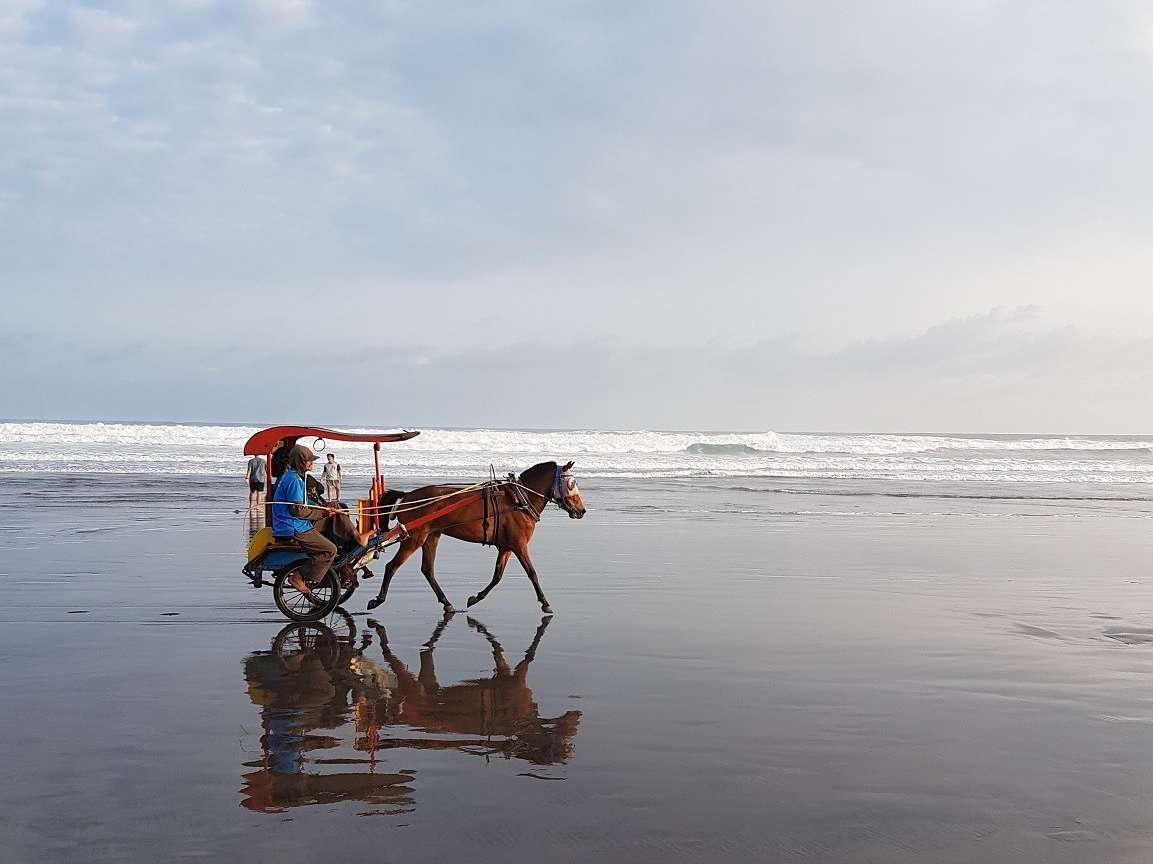
Parangtritis Beach is a tourist beach on the southern coast of Java in the Bantul Regency within the province of the Yogyakarta Special Region. There is a road to the area which is about 30 km south of the city of Yogyakarta. This beach is located south of Parangkusumo Beach, which is also a mainstay of tourism in Bantul Regency. Parangtritis Beach has become a tourism icon in Yogyakarta because this beach is a favorite tourist destination in Yogyakarta. This beach is often visited by local and foreign tourists.

Quite large crowds of mainly local tourists visit Parangtritis over weekends and at holidays. Larger tourist buses as well as various types of cheaper minibuses ply the route to the beach from Yogyakarta. There are local tourist facilities at Parangtritis including parking arrangements, modest hotels which provide visitors with places to change and shower, and small restaurants. Often small ponies or horse-drawn carts can be hired for rides along the beach. Tourists also visit some of the various caves and springs in the cliffs and hills near Parangtritis, such as the Tapan cave and the Beji spring, which are quite close to the beach. Parangtritis is sometimes said to be a place to meet the legendary Nyai Loro Kidul (also known as Ratu Kidul) or 'Queen of the South'. Local folklore warns visitors not to wear green clothes or the queen is likely to try to entice the wearer into the ocean to drown. The beach is not really a good swimming beach. Drownings are not uncommon at Parangtritis, partly because many Indonesians have never had the opportunity to learn proper swimming techniques at beach and partly because channels, strong rips and sizable waves often occur off the beach.


Parangtritis - Wikipedia

Komentar

Postingan populer dari blog ini

EDUCATION

\  Education is the process of facilitating learning, or the acquisition of knowledge, skills, values, morals, beliefs, habits, and personal development. Education originated as the transmission of cultural heritage from one generation to the next. Today, educational goals increasingly encompass new ideas such as the liberation of learners, critical thinking about presented information, skills needed for the modern society, empathy, and complex vocational skills. UNESCO defines three main learning settings. Formal education takes place in education and training institutions, is usually structured by curricular aims and objectives, and learning is typically guided by a teacher. In most regions, formal education is compulsory up to a certain age and commonly divided into educational stages such as kindergarten, primary school, and secondary school. Nonformal learning occurs as an addition or alternative to formal education.  It may be structured according to educational arrange...

Seafood

  Seafood is any form of sea life regarded as food by humans, prominently including fish and shellfish. Shellfish include various species of molluscs (e.g. bivalve molluscs such as clams, oysters and mussels, and cephalopods such as octopus and squid), crustaceans (e.g. shrimp, crabs, and lobster), and echinoderms (e.g. sea cucumbers and sea urchins). Historically, marine mammals such as cetaceans (whales and dolphins) as well as seals have been eaten as food, though that happens to a lesser extent in modern times. Edible sea plants such as some seaweeds and microalgae are widely eaten as sea vegetables around the world, especially in Asia. In the United States, although not generally in the United Kingdom, the term "seafood" is extended to fresh water organisms eaten by humans, so all edible aquatic life may be referred to as "seafood". Seafood is an important source of (animal) protein in many diets around the world, especially in coastal areas. Semi-vegetarians w...